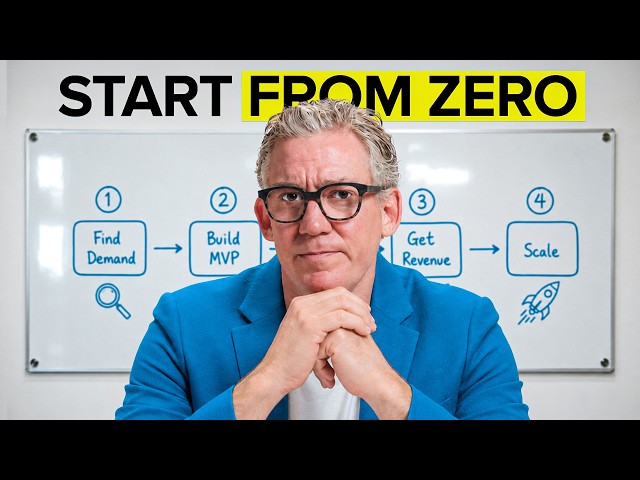
Emily Mitchell started her cupcake business with flour, sugar, and almost nothing else. Today, Lancaster Cupcake generates $3.6 million a year, operates three locations plus cupcake trucks, employs about 60 people, and produces roughly 3,000 cupcakes a day. Mitchell says this scale began with family and friends placing the first orders.
The origin story is stark. Mitchell described the moment that pushed her to start baking professionally. That scarcity became the starting point for what is now a multi-location bakery operation in Pennsylvania.
“We literally had nothing. I think all we had left was flour and sugar in the pantry.”
From Kitchen to Three Locations in 15 Years
Mitchell confirmed the business has been running for a decade and a half (1:22), a timeline that puts the founding well before the current cupcake-business boom. The growth from a home kitchen to a commercial operation with multiple storefronts and mobile trucks was not the result of outside investment. "I think this is a testament that you don't need so much money"(8:16), Mitchell said, pointing to their lean startup approach as proof that capital is not the primary barrier to entry in baking.
“We've been in business now for 15 years.”
The customer acquisition strategy in the early days was entirely personal. That word-of-mouth foundation eventually supported the expansion to brick-and-mortar retail and the mobile truck model, which extends the brand's reach beyond fixed locations.
“Family and friends were my first customers.”
The Unit Economics: Revenue, Labor, and Lease
Jeff Mitchell, Emily's husband who also handles the financial side of the business, explained the key cost and revenue figures during the interview. The numbers reveal a business with strong top-line revenue but a labor structure that demands close managemnt.
| Metric | Figure | Source |
|---|---|---|
| Annual revenue (total company) | $3.6M | Jeff Mitchell (22:14) |
| Labor cost as % of revenue | ~40% | Jeff Mitchell (17:30) |
| Lease cost | $4,500/month | Emily Mitchell (2:25) |
| Daily production capacity | ~3,000 cupcakes | Emily Mitchell (2:41) |
| Employee count | ~60 | Emily Mitchell (17:12) |
For a food business doing $3.6 million, that puts the annual payroll burden at roughly $1.4 million. With 60 employees across locations and trucks, the per-employee average revenue sits around $58,000. This figure underscores how labor-intensive high-volume baking remains, even at scale.
“Our labor costs are about 40% of our revenue.”
On the cost side, the $4,500 monthly lease Emily Mitchell cited (2:25) is a relatively modest fixed expense given the production volume. At 3,000 cupcakes per day, the Granite Run Bakery location alone is running a serious manufacturing operation, not a boutique retail shop.
Financial Management: The Profit First Approach
Jeff Mitchell also described the financial methodology the business uses to stay solvent through revenue swings. The Profit First system approach, popularized by author Mike Michalowicz, reverses the traditional accounting sequence by allocating profit first, then operating from what remains. For a bakery with 40% labor costs and multiple locations, that kind of cash discipline is critical.
“Profit First is a methodology that ensures you save a percentage of your revenue before expenses.”
Advice for Aspiring Bakery Owners
Mitchell's guidance for anyone considering a home baking business was specific on two points: product quality and persistence. "Perfect your recipes. Don't get discouraged"(28:51), she said. She also pushed back on the idea that market saturation is a reason to stay out, saying to the viewers who might feel the cupcake category is already too crowded:
“You have a place. You can do it.”
The checklist below explains the operational sequence Mitchell described for getting a cupcake business off the ground:
- 1Start with what you have, even a near-empty pantry can be the starting point
- 2Perfect your core recipes before scaling production or opening a storefront
- 3Use family and friends as your first customer base to generate early revenue and feedback
- 4Secure a commercial lease only when production volume justifies the fixed cost
- 5Hire incrementally and track labor as a percentage of revenue (target below 40%)
- 6Implement a cash management system (such as Profit First) to protect margins across multiple locations
- 7Expand to mobile formats (trucks) to extend reach without full brick-and-mortar overhead
The Mitchell operation is now 15 years old, which means the $3.6 million figure reflects a long compounding of small decisions, starting with whatever was left in the pantry. Whether that trajectory is replicable depends heavily on the 40% labor cost question: anyone looking to build a similar business at scale will need to answer it before the margins do.