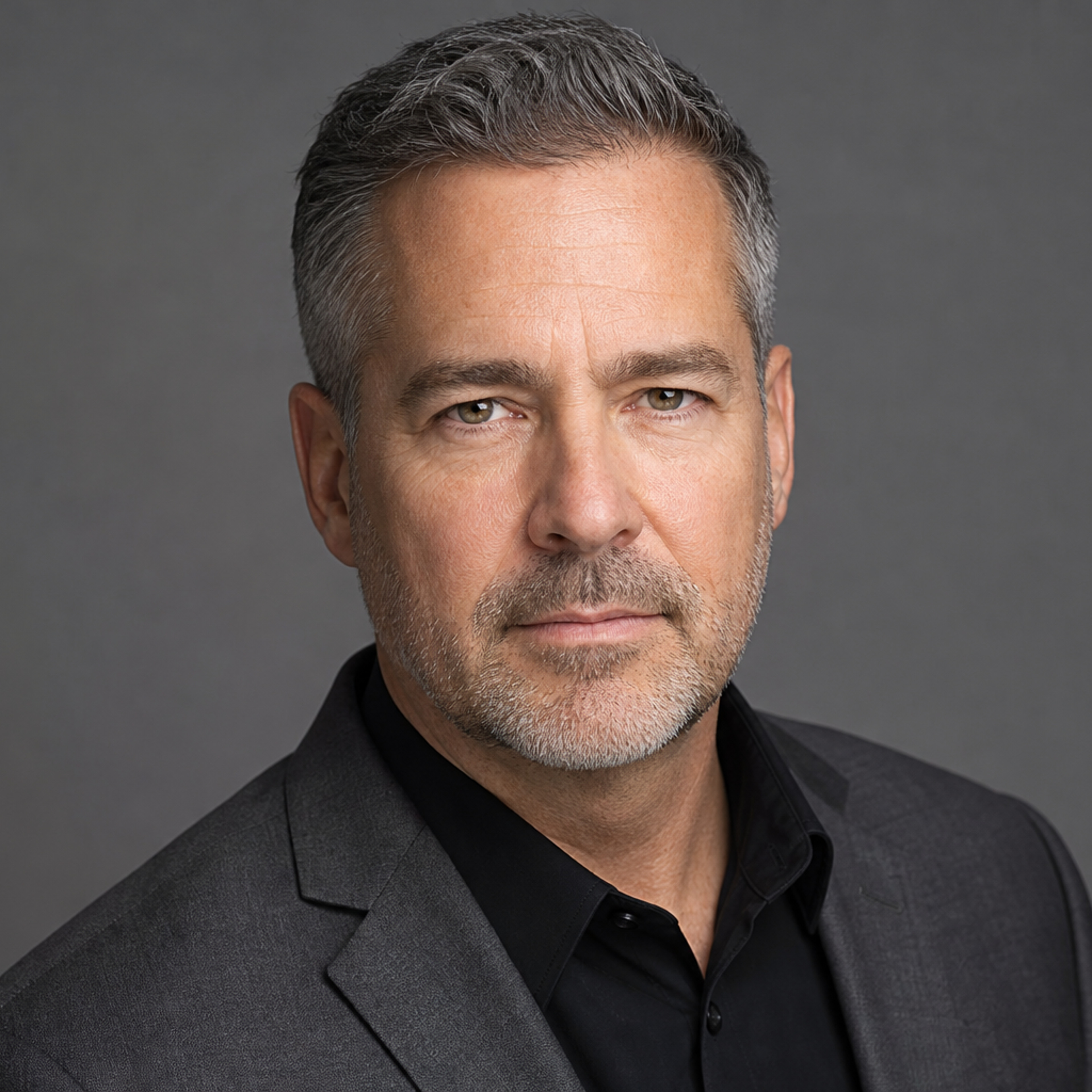
Christian Hluz, the CEO of Platinum Finishing Systems Inc., a paint booth manufacturer, who started his first business in 2008, reported $8 million in revenue for 2025 (24:48), a figure that carries more weight when set against a near-collapse in 2016 that forced a full reset of the operation. David Heacock sat down with the founder to reconstruct that trajectory and examine what the business looks like now.
The 2016 Reset and What Caused It
Hluz's account of 2016 is the structural center of the interview. The business had taken on a large volume of accounts it could not operationally support, and cash flow deteriorated to the point where a hard reset became unavoidable (3:32). The specific failure mode was not a product problem or a demand shortfall; it was a process gap. Revenue had grown faster than the systems behind it.
Heacock has returned to this theme repeatedly in his coverage of small manufacturers. When he examined a struggling $5 million factory, the pattern was similar: operational complexity outrunning management capacity. His observation in this interview was direct: "Revenue growth without a solid process can lead to cash flow issues"(74:23).
“Sometimes you got to know when to let go of something that's not working and pivot.”
Hluz offered that observation while reflecting on the lessons from the 2016 period, framing the reset not as a failure to be minimized but as a deliberate decision once it became clear the existing model was unworkable. He did not specify which accounts or contracts were shed, but the implication was that the business narrowed its scope before rebuilding.
From First Business to Paint Booth Manufacturing
Hluz's entry into manufacturing was not his first venture. He launched his first business in 2008 (1:13), and the evolution into paint booth production came later, what is now known as Platinum Finishing Systems or PFS. In his interview, Hluz does not detail the intermediate steps precisely, but the 2016 crisis appears to have occurred during a period of expansion for PFS rather than at the startup stage, suggesting the business had already achieved meaningful scale before the cash flow problems emerged.
By 2025, the business had reached $8 million in annual revenue. Hluz said that PFS target net margin sits at 15 to 20 percent (34:10), which, if achieved at the current revenue level, would represent $1.2 million to $1.6 million in net income annually for Platinum Finishing Systems Inc. Neither the current realized margin nor the cost structure was broken out in the available material.
| Metric | Figure |
|---|---|
| 2025 Revenue | $8M |
| Target Net Margin (low) | 15% |
| Target Net Margin (high) | 20% |
| Implied Net Income (low) | $1.2M |
| Implied Net Income (high) | $1.6M |
Heacock's Framework: Cash Flow as the Operating Priority
Heacock's closing advice to Hluz was to treat his business as a cash flow machine first, with any future ventures funded from that base rather than from outside capital(87:51). The framing is consistent with positions he has taken across his broader coverage of small and mid-size operators. In the past, when discussing acquiring and compounding small businesses, he argued that boring, cash-generative operations are more durable than growth-at-all-costs models.
“Focus on making your business a cash flow machine to fund future ventures.”
The advice is pointed given the Hluz's history. The 2016 collapse was, by the his own account, a cash flow problem rather than a revenue problem. A business generating sufficient cash to self-fund growth is structurally less exposed to the kind of account-volume trap that forced the reset.
Heacock has covered the cash-versus-growth tension in manufacturing contexts before. For example, His discussion of building a $250 million air filter business included a moment where he described having $157,000 left on a line of credit as a liquidity warning sign, not a comfortable buffer. The paint booth interview revisits the same underlying principle at a smaller scale.
What is still left open is whether the Hluz's current 15 to 20 percent margin target is already being hit or is still aspirational. At $8 million in revenue, the gap between those two states is roughly $400,000 in annual net income. That figure, and whether the business's process infrastructure has actually caught up to its revenue base since 2016, is the question the numbers alone cannot answer.


